

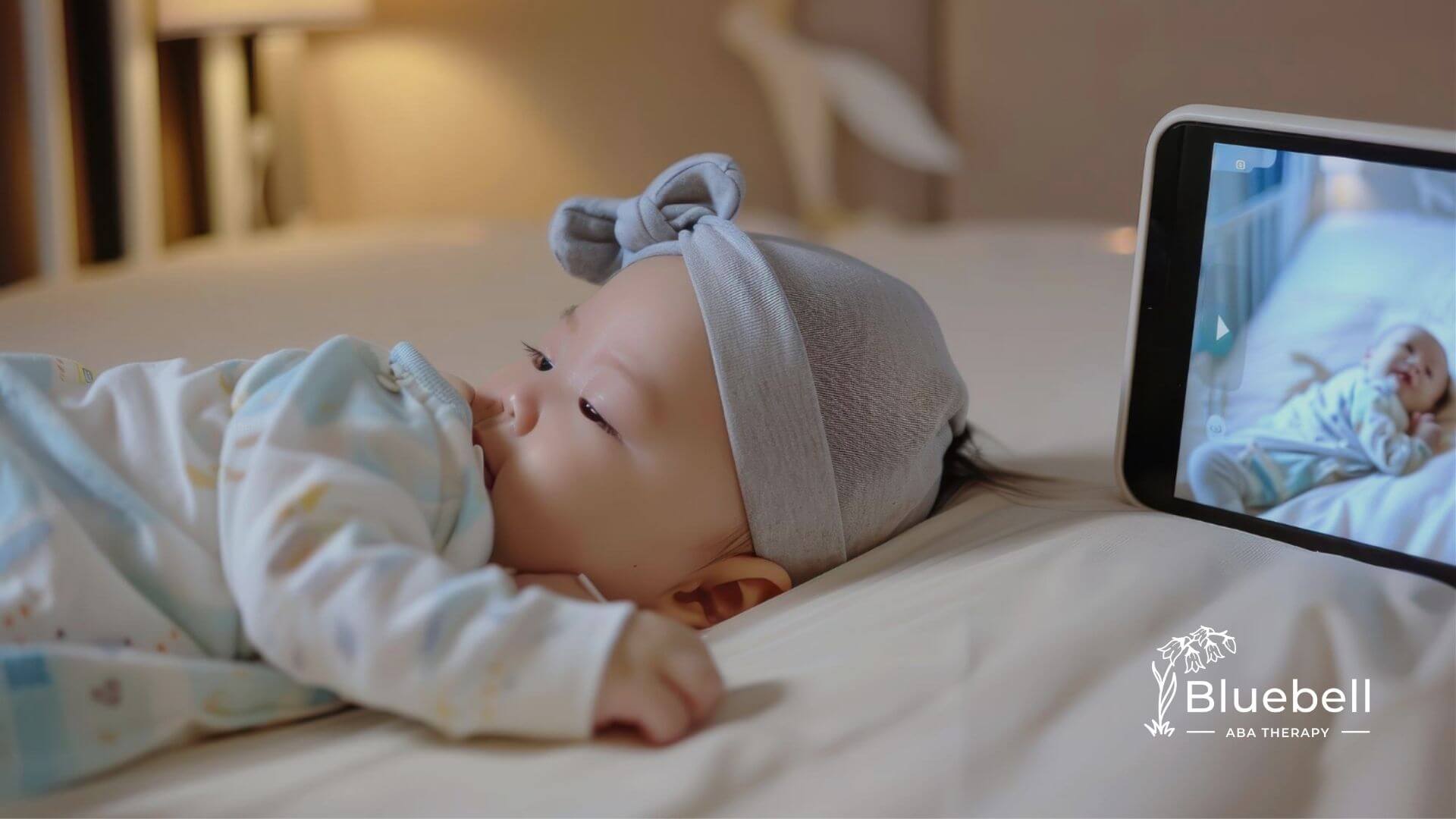
The internet can make almost anything sound convincing — especially when it’s tied to something as emotional as autism.
I remember sitting at a kitchen table during an in-home ABA therapy session when a father told me he had stopped using his baby monitor because he believed it triggered developmental delays. What he needed wasn’t another opinion — it was grounded, research-based clarity.
Understanding autism means separating neurological science from online speculation.
Do Baby Monitors Cause Autism? What Scientific Research Shows
There is currently no scientific evidence linking baby monitors to autism development. Autism Spectrum Disorder (ASD) is a neurodevelopmental condition influenced primarily by genetics and early brain development.
Research on Autism Causes and Risk Factors
Large-scale genetic studies show autism has a strong hereditary component. Brain differences associated with autism begin developing before birth, during prenatal neurological formation.
Major public health organizations do not list baby monitors, Wi-Fi, or standard radiofrequency exposure as causes of autism.
In clinical conversations, I’ve reassured many parents about this. I worked with a mother who felt deep guilt about using a Wi-Fi baby monitor. She wondered if she had unknowingly harmed her child. That guilt dissolved once we reviewed actual evidence.
Understanding Radiofrequency (RF) Exposure from Baby Monitors
Most baby monitors use low-level RF or Wi-Fi signals. These exposure levels are comparable to other common household electronics.
Current peer-reviewed research does not show that normal residential RF exposure causes autism. The biological mechanisms proposed online have not been supported in controlled studies.
Why Do People Think Baby Monitors Cause Autism?
If there’s no evidence, why does the belief continue circulating?
Autism Symptoms Often Appear During Baby Monitor Use
Autism signs typically become noticeable between 12 and 24 months. This is also when baby monitors are heavily used.
When two events happen around the same time, it’s natural to assume one caused the other. But timing does not equal causation.
The Role of Parental Guilt and Cognitive Bias
After an autism diagnosis, parents often replay everything that happened during infancy. The brain looks for something concrete to explain uncertainty.
Technology becomes a convenient explanation because it feels modern and unfamiliar. In reality, autism-related neurological differences were already present long before behavioral signs became noticeable.
Understanding this reduces misplaced blame.
What Actually Causes Autism? Genetics and Brain Development
Instead of focusing on myths, it’s more productive to understand what science does support.
Genetic Factors in Autism Development
Research consistently shows a strong genetic influence. Autism often runs in families, and certain gene variations are associated with increased likelihood.
This does not mean autism is predictable — but it does mean biology plays a central role.
Prenatal and Early Developmental Influences
Some factors associated with increased autism likelihood include:
- Advanced parental age
- Premature birth
- Certain prenatal complications
Even here, these are risk factors, not direct causes. Autism develops through complex gene-environment interactions, not from a single exposure like a baby monitor.
Early Signs of Autism Parents Should Watch For
If concerns about baby monitors stem from noticing developmental differences, it’s important to redirect attention to observable signs.
Communication and Social Development Red Flags
Parents may consider speaking with a pediatrician if they notice:
- Limited babbling by 12 months
- No single words by 16 months
- Limited eye contact
- Reduced response to name
- Minimal pointing or joint attention
In my clinical work, I often see parents delay evaluation while researching possible causes. When they shift toward assessment and support, progress becomes possible.
Why Early Evaluation Matters
Autism is not caused by electronics — but early intervention significantly improves outcomes.
The earlier we begin targeting communication, social engagement, and adaptive skills, the stronger the foundation becomes.
How ABA Therapy Supports Children with Autism
Once families move past myths, the next question becomes: What can we do now?
Applied Behavior Analysis (ABA) is an evidence-based approach that strengthens skill development.
What Happens During an ABA Assessment
We evaluate:
- Expressive and receptive language
- Play skills
- Social interaction patterns
- Behavioral regulation
- Adaptive functioning
From there, we design measurable goals.
In-Home and School-Based ABA Services in North Carolina
If you’re in North Carolina and have developmental concerns, early support makes a meaningful difference. Bluebell ABA provides individualized in-home and school-based ABA therapy designed to build communication, social, and adaptive skills in supportive environments.
The most powerful step is not removing a device — it’s seeking structured, evidence-based support.
If you’re ready to move forward with clarity instead of fear, reach out to schedule an assessment and begin building a personalized plan for your child.
Does Wi-Fi or Technology Cause Autism? Addressing Related Concerns
Parents often extend this question beyond baby monitors.
Does Wi-Fi Exposure Cause Autism?
There is no credible scientific evidence linking standard household Wi-Fi exposure to autism.
Does Screen Time Cause Autism?
Screen time does not cause autism. However, excessive passive screen use may impact language exposure in all children. This is a developmental consideration, not a causation issue.
When evaluating online claims, it’s essential to prioritize peer-reviewed research over anecdotal sources.
Baby Monitors Do Not Cause Autism
When someone asks, “Do baby monitors cause autism?”, what they’re really asking is whether they made a mistake.
You didn’t.
Autism is not caused by baby monitors, Wi-Fi, or everyday household electronics. It reflects neurological differences that begin during early brain development.
If you’re in North Carolina and have developmental concerns, early support makes a meaningful difference. Bluebell ABA provides individualized in-home and school-based ABA therapy designed to build communication, social, and adaptive skills in supportive environments.
The most powerful step is not removing a device — it’s seeking structured, evidence-based support.
If you’re ready to move forward with clarity instead of fear, reach out to schedule an assessment and begin building a personalized plan for your child.
FAQs
1. Can baby monitors increase autism risk?
No. Scientific research does not support a connection between baby monitor use and autism.
2. Is autism caused by environmental exposure?
Autism develops from complex genetic and biological factors. No single environmental cause has been identified.
3. Should I stop using Wi-Fi baby monitors?
There is no medical recommendation to stop using baby monitors due to autism concerns.
4. Why do autism symptoms appear after infancy?
Signs become more noticeable as social and language expectations increase, even though neurological differences were present earlier.
5. What should I do if I suspect autism?
Speak with your pediatrician and consider a developmental evaluation. Early ABA therapy can support communication and adaptive growth.
Sources:
- https://medschool.ucla.edu/news-article/is-autism-genetic
- https://health.clevelandclinic.org/are-siblings-at-greater-risk-of-autism
- https://pmc.ncbi.nlm.nih.gov/articles/PMC4381277/
- https://pmc.ncbi.nlm.nih.gov/articles/PMC10442849/
https://www.autismparentingmagazine.com/screen-time-kids-with-asd/