

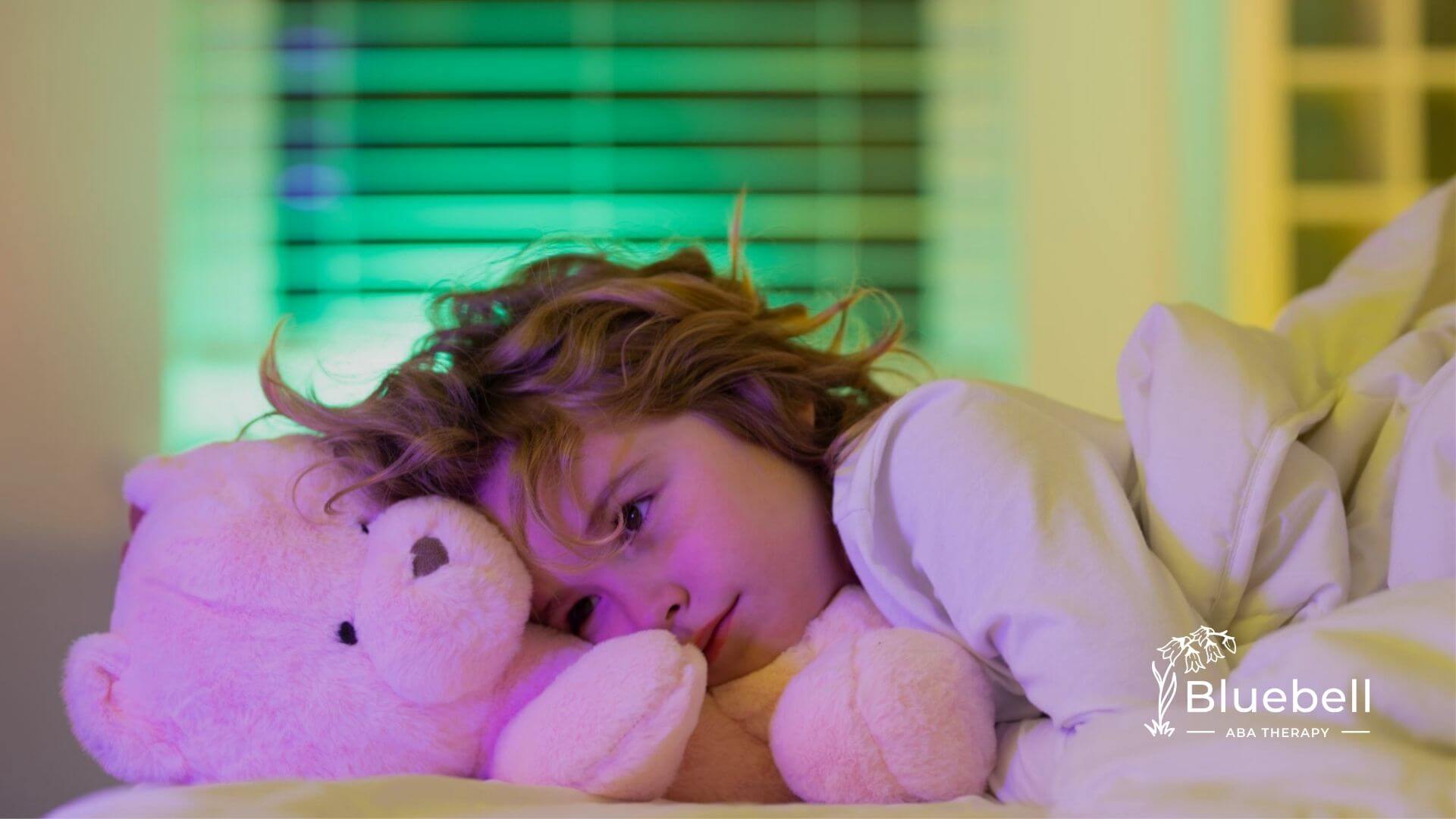
Sleep is a learned behavior influenced by environment, routine, and reinforcement patterns. In children with autism, sleep disorders often develop when anxiety, sensory differences, or inconsistent routines interfere with regulation.
ABA therapy approaches sleep through careful assessment and measurable intervention.
Through our North Carolina ABA services, Bluebell ABA delivers individualized support in both home and school settings. Our in-home ABA therapy allows us to directly address bedtime routines, while our school-based ABA therapy strengthens daytime regulation skills that support improved sleep at night.
Understanding the Link Between Autism and Sleep Disorders
Sleep challenges in autistic children are rarely random. They often stem from identifiable behavioral, sensory, or environmental patterns that can be addressed systematically.
Common Sleep Disorders in Autism
In our experience, the most frequent sleep-related concerns include:
- Sleep onset insomnia (difficulty falling asleep)
- Frequent night wakings
- Early morning waking
- Bedtime refusal
- Reliance on parental presence to fall asleep
We supported an eight-year-old who remained awake until nearly midnight most nights. The family had tried melatonin and extended bedtime routines without success. After reviewing sleep logs, we identified inconsistent sleep timing and high levels of stimulation before bed. With structured adjustments, sleep onset gradually improved.
Autism and sleep disorders often overlap because of neurological regulation differences, anxiety around transitions, and reinforcement patterns that unintentionally maintain wakefulness.
How Sleep Deprivation Impacts Behavior and Learning
When sleep decreases, we consistently see:
- Increased irritability
- Lower frustration tolerance
- Reduced instructional engagement
- Increased aggression or self-injury
- Slower skill acquisition
In one Bluebell ABA case, a preschooler’s daytime tantrums decreased significantly once his night wakings reduced from four per night to one. The behavioral programming during the day did not change — his nervous system simply became more regulated with improved rest.
Sleep is foundational. Without it, other interventions become less effective.
How ABA Therapy Treats Sleep Problems in Autism
ABA therapy addresses sleep as a behavior pattern influenced by antecedents and consequences. We rely on data rather than guesswork.
Conducting a Functional Sleep Assessment
Before recommending intervention, we gather detailed information:
- Bedtime routines
- Sleep logs
- Environmental conditions
- Caregiver responses to night waking
- Reinforcement patterns
For example, we worked with a five-year-old who left her room repeatedly after bedtime. Data showed she consistently received extended conversation and reassurance each time. While well-intentioned, this attention reinforced the leaving behavior.
Once we implemented a structured response plan with minimal interaction and clear reinforcement for staying in bed, the frequency gradually declined.
Assessment guides ethical and effective intervention.
Creating Structured Bedtime Routines
Predictability reduces anxiety and resistance. We often design bedtime routines that are:
- Consistent in timing
- Visually supported
- Calm and low-stimulation
- Clear in expectations
In one in-home case, we introduced a simple visual bedtime chart: bath → pajamas → story → lights out. Initially, the child protested during the transition to lights out. Over several weeks, with consistent implementation and reinforcement for compliance, resistance decreased from 45 minutes of protest to under 10.
Structure builds security.
Using Reinforcement and Gradual Fading Strategies
Some children depend on caregiver presence to fall asleep. In these situations, we implement gradual fading procedures.
Rather than abruptly removing support, we might:
- Sit beside the bed for several nights
- Move progressively farther away
- Shorten verbal interaction
- Reinforce independent settling
We individualize pacing carefully. Ethical ABA avoids unnecessary distress and prioritizes assent and emotional readiness.
In one case, gradual fading reduced co-sleeping dependence over six weeks. The child learned to fall asleep independently without significant escalation — because the process was systematic and supportive.
Addressing Sensory Factors That Interfere With Sleep
Sensory processing differences play a major role in autism and sleep disorders. Ignoring sensory variables can undermine behavioral interventions.
Optimizing the Sleep Environment
We assess and modify environmental factors such as:
- Lighting (including subtle flickering)
- Noise levels
- Bedding textures
- Room temperature
One child we supported woke nightly at 2 a.m. After evaluation, we discovered a heating unit cycling on at that time, producing a low but noticeable sound. Adjusting the environment significantly reduced night waking.
Small sensory shifts can produce meaningful change.
Teaching Self-Soothing and Regulation Skills
Sleep independence requires self-regulation skills. During daytime sessions, we teach:
- Deep breathing
- Quiet relaxation routines
- Accessing a comfort object appropriately
- Following a calm-down script
We once worked with a nine-year-old who panicked upon waking at night. During therapy sessions, we practiced a simple breathing and counting routine paired with visual supports. Over time, he began using the strategy independently after brief night wakings, returning to sleep without caregiver intervention.
Daytime skill-building supports nighttime success.
Collaborating With Caregivers for Sustainable Sleep Improvements
Sleep interventions occur at home, so caregiver consistency is critical. We provide:
- Clear written sleep plans
- Data tracking templates
- Ongoing review and adjustments
- Coaching for implementation challenges
We’re always transparent: sleep change is gradual. Families often see incremental improvements first — 15 minutes faster sleep onset, one fewer night waking — before more substantial changes occur.
In our experience at Bluebell ABA, steady, consistent application produces more durable results than rapid but unsustainable adjustments.
When Medical or Multidisciplinary Support Is Needed
Not all sleep disorders in autism are behavioral. Medical contributors such as gastrointestinal discomfort, seizure disorders, or melatonin regulation differences may require physician involvement.
We collaborate with pediatricians and specialists when indicated. ABA works best when integrated into a coordinated care plan.
ABA for Autism and Sleep Disorders: Building Rest Through Structure
ABA for autism and sleep disorders focuses on:
- Identifying reinforcement patterns
- Creating predictable routines
- Teaching independent sleep skills
- Modifying environmental triggers
- Monitoring progress through data
Over the years, we’ve seen children move from two-hour bedtime battles to consistent, manageable routines. We’ve seen night wakings decrease and morning transitions become calmer. These improvements don’t happen overnight — but they do happen with structured, individualized support.
At Bluebell ABA, we provide personalized ABA therapy across North Carolina, delivering services in the environments where sleep challenges actually occur. Our in-home ABA therapy allows us to directly support bedtime routines within the home, while our school-based ABA therapy helps strengthen daytime regulation that supports better sleep at night.
If sleep difficulties are impacting your child’s well-being, we’re here to help. Contact Bluebell ABA today to learn how our individualized, evidence-based ABA programs can support healthier sleep patterns and more regulated days — and nights.
FAQs
1. Can ABA therapy help children with autism sleep better?
Yes. ABA therapy addresses behavioral and environmental factors that interfere with sleep. By creating structured bedtime routines, adjusting reinforcement patterns, and teaching independent sleep skills, many children experience measurable improvements in sleep onset and night waking.
2. What sleep problems are common in autism?
Common sleep challenges include:
- Difficulty falling asleep
- Frequent night waking
- Early morning waking
- Bedtime resistance
- Dependence on caregiver presence
These issues are often influenced by sensory sensitivities, anxiety, and reinforcement patterns.
3. Is ABA sleep training the same as traditional sleep training?
Not exactly. ABA-based sleep intervention is individualized and data-driven. Rather than applying one universal method, we assess each child’s behavior patterns and design gradual, ethical interventions that prioritize emotional readiness and consistency.
4. How long does it take for ABA to improve sleep problems?
Progress varies. Some families see small improvements within a few weeks, such as shorter sleep onset time. Larger changes typically occur gradually as routines stabilize and independent sleep skills strengthen.
5. Does ABA address sensory issues related to sleep?
Yes. We evaluate environmental variables such as lighting, sound, bedding textures, and temperature. Sensory adjustments are often incorporated alongside behavioral strategies to support overall regulation.
6. Can ABA therapy address both daytime behavior and sleep issues?
Absolutely. Sleep and daytime regulation are closely connected. Through coordinated In-home ABA therapy and School-based ABA therapy, we address both nighttime routines and daytime coping skills to create comprehensive support.
Sources:
- https://pmc.ncbi.nlm.nih.gov/articles/PMC10687592/
- https://pmc.ncbi.nlm.nih.gov/articles/PMC4770638/
- https://www.autismspeaks.org/sleep
- https://autism.org/sleep-issues-in-autism-beth-malow-m-d/
- https://psychiatryonline.org/doi/full/10.1176/appi.focus.20230028
- https://www.sleepfoundation.org/physical-health/autism-and-sleep
- https://www.mayoclinic.org/diseases-conditions/insomnia/in-depth/insomnia-treatment/art-20046677