

Written By:

More parents are asking about combining play therapy and ABA therapy—and for good reason. Children don’t learn in just one way, and therapy shouldn’t be one-size-fits-all.
I worked with a child who followed every ABA instruction but showed signs of anxiety. When play therapy was added, his stress decreased and his progress sped up. That balance made all the difference.
Combining play therapy and ABA therapy in real life
ABA therapy is known for being structured and data-driven. It focuses on teaching meaningful skills, improving communication, and reducing challenging behaviors.
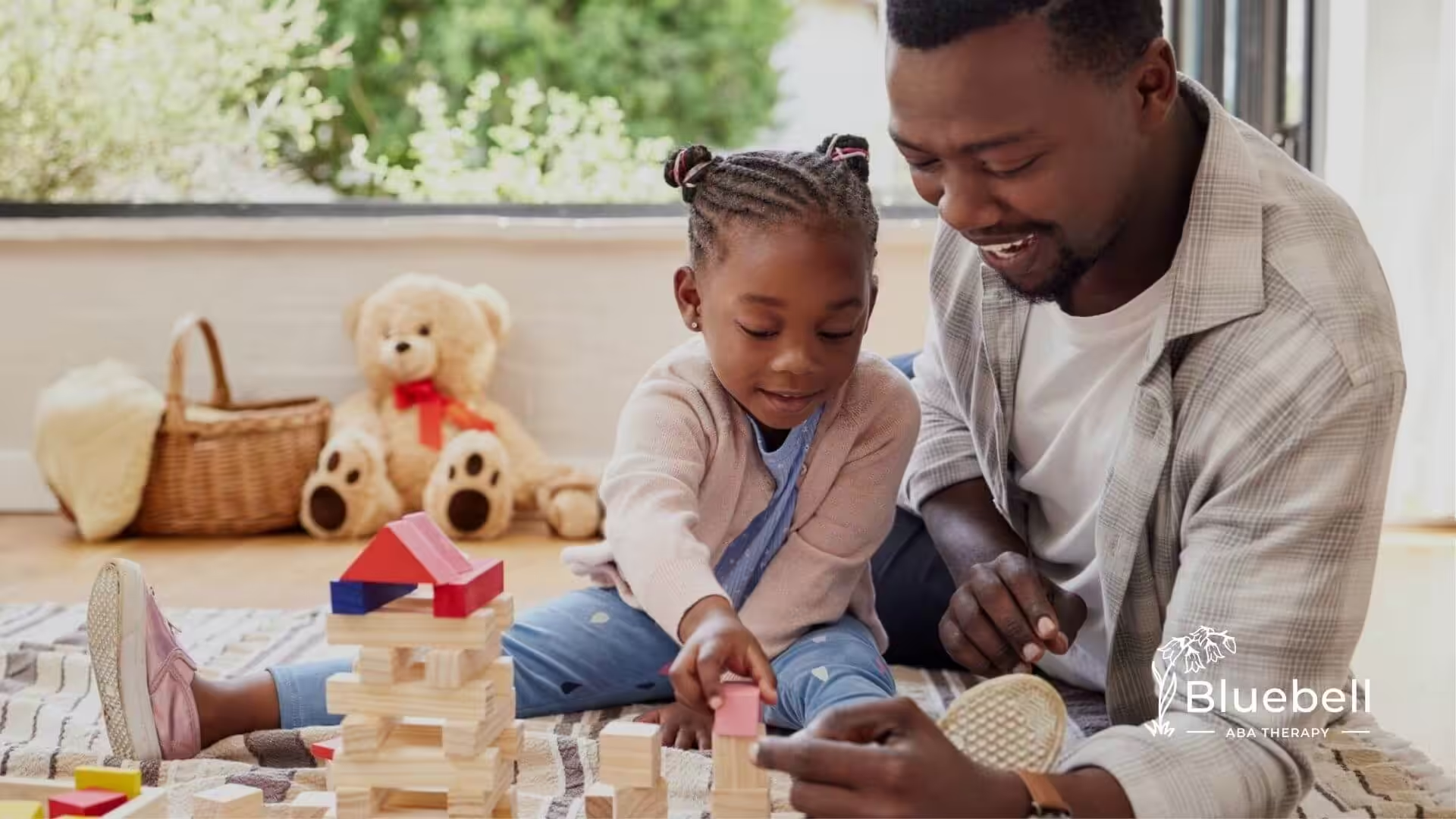
Play therapy is more child-led and relationship-focused. It helps kids express emotions, build trust, and learn social skills through play.
In my experience, these approaches don’t clash—they balance each other.
When I design ABA programs, I often use play-based ABA strategies to keep sessions engaging and natural. Adding play therapy on top of that can help children work through emotions, anxiety, or frustration that might otherwise slow progress.
Why play therapy and ABA work well together
Before getting into the benefits, here’s the key thing I want parents to know: therapy should fit the child, not the other way around.
Here’s what I see when play therapy and ABA therapy are combined thoughtfully:
- Higher motivation during ABA sessions because learning happens through play
- Better emotional regulation, especially for younger children
- Improved social and communication skills in more natural settings
- Stronger relationships between the child, therapist, and family
- More individualized autism therapy plans that reflect the whole child
For many kids, this combination supports both behavioral growth and emotional development—which is exactly what we want.
What families should keep in mind
Collaboration matters. ABA therapists and play therapists should communicate and stay aligned on goals. Without that teamwork, therapy can feel disconnected or confusing for the child.
Also, not every child needs both therapies. Some do great with play-based ABA alone, while others benefit from adding play therapy. A qualified BCBA can help guide that decision.
ABA services in North Carolina that meet families where they are
At Bluebell ABA, this balanced approach is something we believe in deeply. Our team works closely with families to create ABA therapy plans that feel natural, flexible, and truly supportive of the whole child—not just a list of goals.
We proudly provide ABA therapy services in North Carolina, with options designed to fit real family life:
- In-home ABA that allows children to learn and grow in the comfort of their own home
- School-based ABA to support behavior, learning, and independence in the classroom
If you’re considering ABA therapy—or wondering how a play-based approach might fit your child’s needs—we’re here to help. Reach out to our team today to start a conversation and see how we can support your family.
FAQs
Can play therapy and ABA therapy be used at the same time?
Yes. Many children benefit from receiving both, as long as therapists coordinate goals and strategies.
Is play-based ABA the same as play therapy?
Not exactly. Play-based ABA still follows ABA principles, while play therapy focuses more on emotional expression and relationships.
Does combining therapies help children with autism?
For many children, yes. Combining play therapy and ABA therapy can support skill development, emotional regulation, and social growth at the same time.
Sources:
- https://www.autismspeaks.org/applied-behavior-analysis
- https://pmc.ncbi.nlm.nih.gov/articles/PMC9850869/
- https://www.autism.org.uk/autism-services-directory/p/play-therapy
- https://pmc.ncbi.nlm.nih.gov/articles/PMC9458805/
- https://www.cdc.gov/autism/treatment/index.html